




Ozempic Face and Loose Skin After Weight Loss Injections
Contents
Losing a lot of weight quickly on a GLP-1 medication does two things to your appearance that the scales do not show: you lose muscle alongside the fat, and your skin does not shrink at the same rate. That is why people who are delighted with the number on the scales are often unhappy with the mirror. This page explains why it happens and what actually helps, from someone who is not selling you the drug.
To be clear about what this is: we are not a weight loss clinic, we do not prescribe these medications, and nothing here is medical advice about them. Your prescriber is the right person for that conversation. What we deal with is the aesthetic side afterwards.
Ozempic face, Mounjaro face, Wegovy face: the same problem with different names
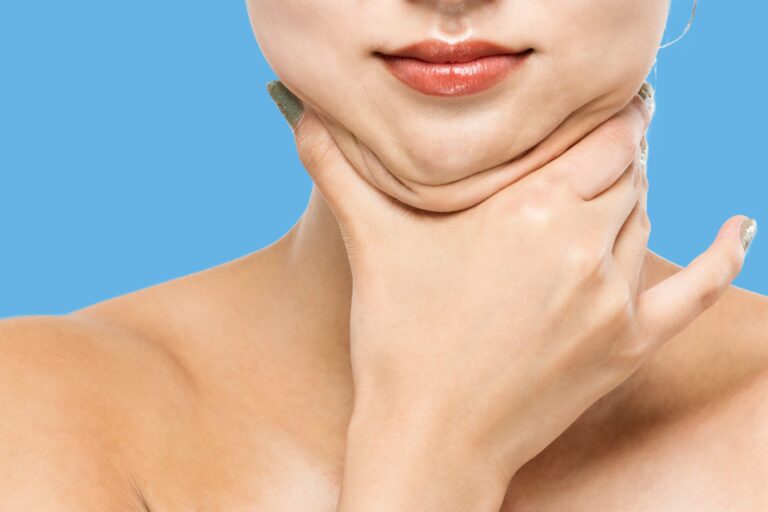
Whatever you were prescribed, the pattern is the same. Fat leaves the cheeks, temples and jawline faster than the skin can adapt, so the face looks drawn and the jowls and neck look looser than they did at a heavier weight. On the body it shows as a softer stomach, inner thighs and upper arms. People searching for "Ozempic face treatment in Newcastle" usually need one of two things, volume or tightening, and sometimes both. We see it most weeks at our Whickham clinic and the rest of this page explains how we tell the two apart and what we do about each.
What actually happens to your face and body
You lose muscle as well as fat
Rapid weight loss without resistance training and adequate protein takes muscle with it. Studies of GLP-1 weight loss have reported a meaningful share of the total loss coming from lean mass. Less muscle under the skin means less shape, a softer outline, and often a body that looks smaller but not more defined.
Skin does not follow the fat down
Skin has a limited ability to retract, and that ability falls with age, sun damage, smoking and how long the skin was stretched. Lose 20 per cent of your body weight in nine months and the skin has not had time to remodel. The common areas are the lower face and neck, the upper arms, the inner thighs and the abdomen.
Facial volume goes first, and it is noticed
The face carries deep fat pads that give it structure. They are among the first places the body draws from, which is why people report looking drawn, older and more tired even when they are healthier than they have been in years. This is the effect the press has labelled "Ozempic face", though it happens with any rapid weight loss.
What actually helps, in order of what matters most
1. Protein and resistance training
This is first because it is the only thing on the list that prevents the problem rather than treating it afterwards, and it is free. Adequate protein and two or three sessions of resistance work a week substantially reduce how much muscle you lose. If you are still losing weight, start here before you spend anything with us or anyone else.
2. Muscle, where training has not been enough
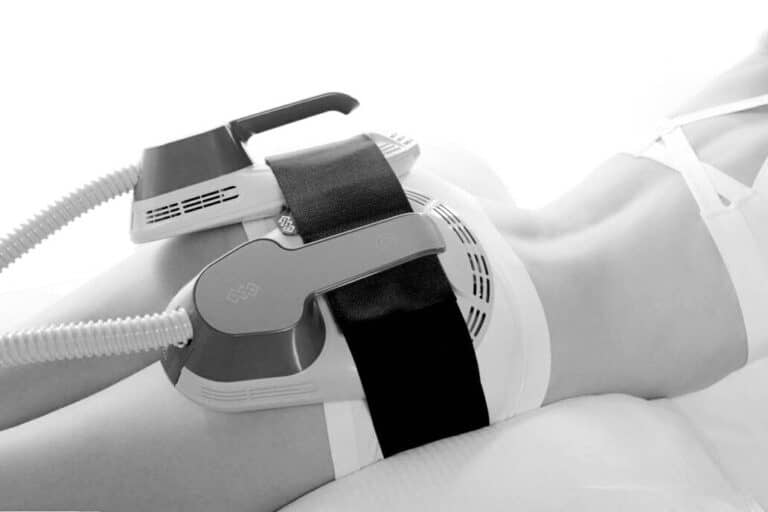
EMSculpt Neo builds muscle in a treated area through supramaximal contractions. It is most useful for the abdomen, glutes and arms where tone has gone and training alone is slow to bring it back. It is not a substitute for training and we will say so.
3. Skin tightening, once your weight has settled
Timing matters more than the treatment. Tightening skin while you are still losing weight means treating a moving target. We would rather see you three to six months after your weight has been stable. Our short guide on when to start treating loose skin after Mounjaro sets out the timeline.
For the face and neck, HIFU reaches the SMAS layer and produces the most lift of the non-surgical options. For skin quality and milder laxity, radiofrequency works more gradually and more comfortably. For the body, HIFU body treatment helps mild to moderate laxity.
Upper arms work the same way: see which of the three bingo wing problems you have before booking anything for them.
For the body specifically, HIFU on the inner thighs, arms and abdomen covers what each area realistically gives.
4. Facial volume and skin quality
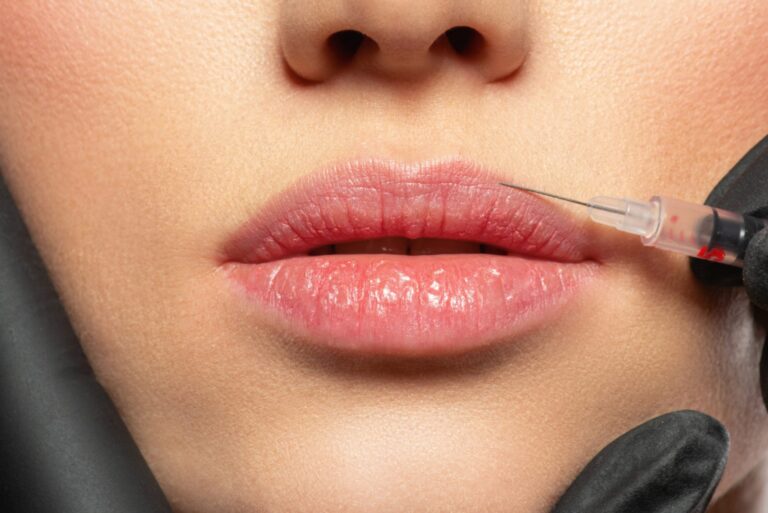
Where the face has hollowed, polynucleotides and skin boosters improve the quality and hydration of the skin itself, and dermal fillers can restore structure where volume has gone. Used conservatively this looks like you, rested. Used heavily it looks like work, which is the opposite of the goal.
5. Fat that is still stubborn
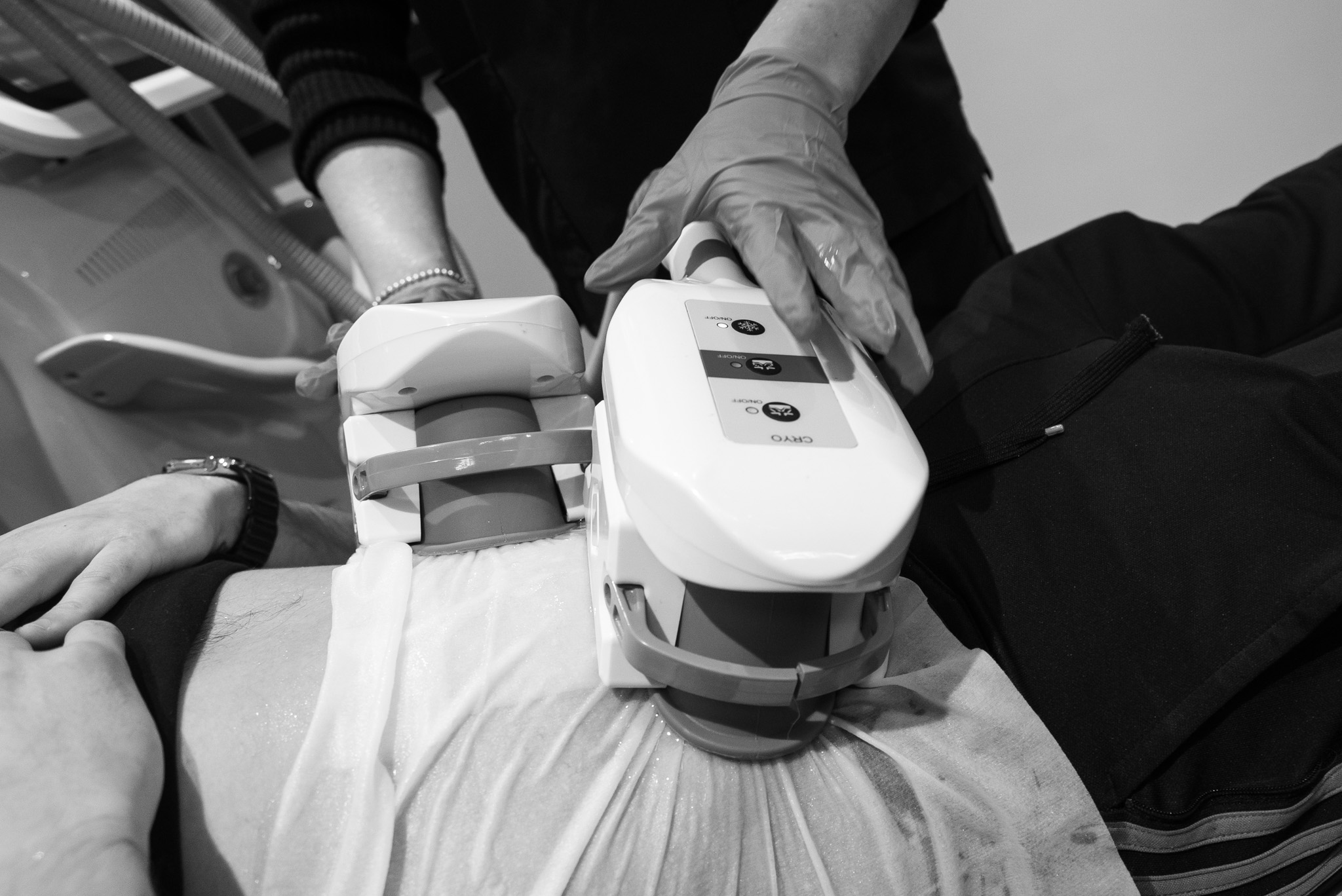
Some pockets stay put even after significant weight loss, often the flanks and the lower abdomen. Fat freezing treats a defined pocket. It is the last item on this list deliberately, because after rapid weight loss the problem is far more often laxity than remaining fat, and treating it as fat makes the skin look worse.
When to start
| Where you are | What makes sense now |
|---|---|
| Still losing, early on | Protein and resistance training. Nothing aesthetic yet. |
| Still losing, significant loss already | Muscle work can start. Hold off on skin tightening. |
| Weight stable 3 months or more | Assessment for skin tightening and facial work. This is the point most people should come in. |
| Weight stable, significant loose skin | Honest conversation. Beyond moderate laxity, surgery is the answer and we will tell you that. |
The honest limits
Non-surgical skin tightening handles mild to moderate laxity. If you have lost a great deal of weight and can lift a fold of skin, no device on the market will fix that, and a clinic promising otherwise is taking your money. The appropriate route is a plastic surgeon and a body contouring procedure, and we would rather point you there than sell you a course that disappoints you at the twelve week photographs.
We also will not treat you while you are still losing weight quickly, however much you want to get started. It wastes the treatment.
Common questions
Will my skin tighten on its own if I wait?
Some of it will. Skin continues to retract for up to a year or two after weight stabilises, and younger skin does more of it. That is a real argument for waiting before spending anything.
Can I have treatments while still on the medication?
Being on a GLP-1 is not itself a barrier to the treatments we offer. What matters is whether your weight has settled. Tell us what you are taking at the consultation, as you would with any medication.
What about my face specifically?
Facial volume loss and facial laxity are two different problems and often occur together. Volume needs replacing, laxity needs tightening, and treating one when the issue is the other is the most common mistake we see.
How much does all this cost?
It depends entirely on what you actually need, which is why the assessment comes first and is free. Our price list has individual treatment pricing.
Come in and get a straight answer
Bring your history: how much you have lost, over what period, and whether your weight has settled. We will look at the areas that are bothering you, tell you which are fat, which are laxity and which are volume, and set out what would help. If the answer is wait six months, that is what you will hear. Book a free assessment at our Whickham clinic.
Our Other Blogs
Our goal is simple: safe treatment, results you can measure, and support that carries on after you leave the clinic.
Over 1,000 five star reviews