




How to Calculate BMI: Calculator, Formula, UK Ranges and What It Misses
Contents
BMI, or body mass index, is a quick way of checking whether your weight is in a healthy range for your height. It takes thirty seconds to work out, it is what your GP uses, and it is also a blunt tool that gets plenty of people wrong. This page gives you a calculator, the formula if you want to do it by hand, the UK ranges, and an honest look at what BMI misses, because at our clinic in Whickham, Newcastle, we see every day that the number on the chart and the shape in the mirror are two different things.
BMI calculator
Enter your height and weight in whichever units you think in.
For adults aged 18 and over. BMI is a screening measure, not a diagnosis, and it does not account for muscle, build or where you carry fat.
How to calculate BMI by hand
BMI is your weight in kilograms divided by your height in metres squared. Take your height in metres and multiply it by itself, then divide your weight by that number. Someone who is 1.70 metres tall and weighs 75 kilograms works it out as 1.70 times 1.70, which is 2.89, then 75 divided by 2.89, which gives a BMI of 26. If you think in feet and pounds, multiply your weight in pounds by 703 and divide by your height in inches squared. The calculator above does both.
What the BMI ranges mean in the UK
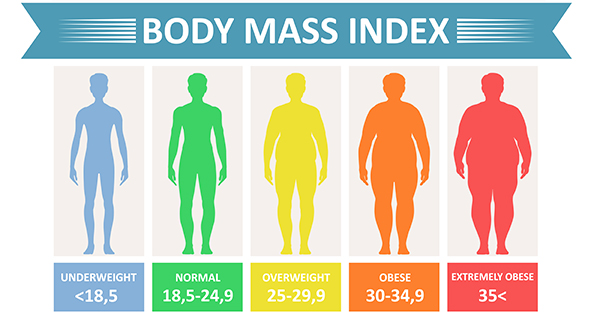
The NHS uses the same bands for adults as the World Health Organisation. Below 18.5 is underweight. From 18.5 to 24.9 is the healthy range. From 25 to 29.9 is overweight. From 30 to 39.9 is obese, and 40 or above is severely obese. The NHS also advises people from Asian, Black African, African-Caribbean and Middle Eastern backgrounds to treat 23 as the top of the healthy range and 27.5 as the start of the obese range, because health risks rise at a lower BMI in those groups. BMI is not used in the same way for children, during pregnancy or for anyone very muscular.
Why BMI matters, and why it gets people wrong
BMI matters because, across a whole population, a higher number tracks with a higher risk of type 2 diabetes, heart disease, some cancers and joint problems, which is why GPs use it as a first screen. The trouble starts when you apply a population average to one person. BMI cannot tell muscle from fat, so a rugby player can be "obese" with a flat stomach. It cannot tell where you carry fat, and fat around the middle carries far more risk than fat on the hips and thighs. It does not change with age even though body composition does, and it says nothing at all about fitness.
A better companion measure is your waist to height ratio. Measure your waist at the belly button and keep it under half your height. Someone 170 centimetres tall should have a waist under 85 centimetres. The National Institute for Health and Care Excellence added that measure to its guidance in 2022 for exactly this reason, and it catches the people BMI misses, in both directions.
What your BMI means for non-surgical fat treatments
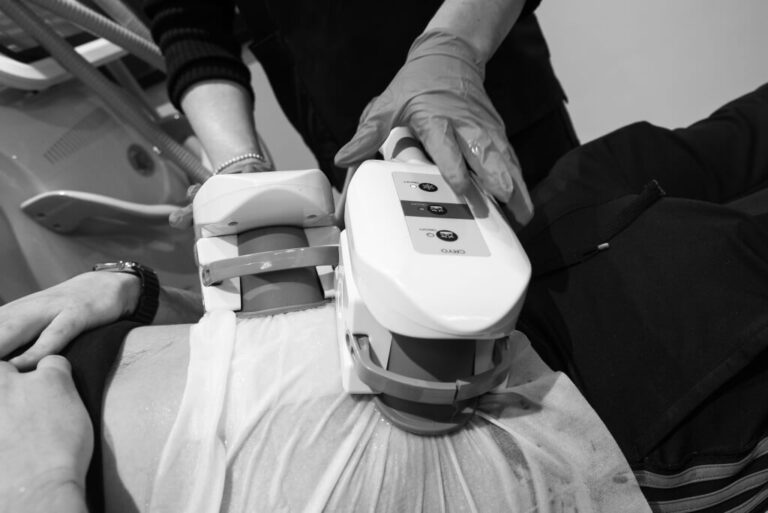
This is the question most people who land on this page are really asking. Our treatments change the shape of an area. They are not a weight loss treatment and we will not sell them as one. Where BMI comes in is choosing the right tool. If you are in the healthy or overweight range with a pocket of fat that will not shift, fat freezing is the usual answer, from £350 an area, because the applicator can draw that pocket in and hold it. At a higher BMI the fat tends to sit as a layer rather than a pocket and the applicators cannot get a clean grip, so we use Emerald Laser, which works across the whole area without suction, alongside the diet and movement changes that should be doing most of the work. If weight has come down quickly and left loose skin behind, the answer is tightening rather than fat removal, which is covered on the skin tightening page. The body sculpting page compares all of the options, and the assessment is free, so you do not have to guess.
Questions people ask
Is a BMI of 25 overweight?
Yes, 25 is the first number in the overweight range on the standard chart. It is also the BMI of a lot of fit, muscular people, which is why we would look at your waist measurement and body composition before reading anything into it.
What is a healthy BMI for a woman?
The ranges are the same for men and women: 18.5 to 24.9 is the healthy range. Women naturally carry a higher percentage of body fat than men at the same BMI, which is one more reason the number on its own does not tell the whole story.
Can I have fat freezing if my BMI is over 30?
Sometimes, if there is a defined pocket the applicator can hold. More often at that level we recommend Emerald Laser instead, and we will tell you which at your free assessment rather than booking you in for a treatment that will not work.
Does BMI change with age?
The ranges do not, but your body does. Muscle falls and fat rises from the forties onwards even at a steady weight, so two people with the same BMI thirty years apart can have very different body composition.
Not sure which treatment you need?
Book a free 30 minute assessment at our Whickham clinic. No pressure, an honest answer and a written price.
Or call 0191 649 8699 or text 07307 201681
Read more
Our Other Blogs
Our goal is simple: safe treatment, results you can measure, and support that carries on after you leave the clinic.

Over 1,000 five star reviews