




HIFU vs Ultherapy: What Is Actually Different, and Which to Choose
Contents
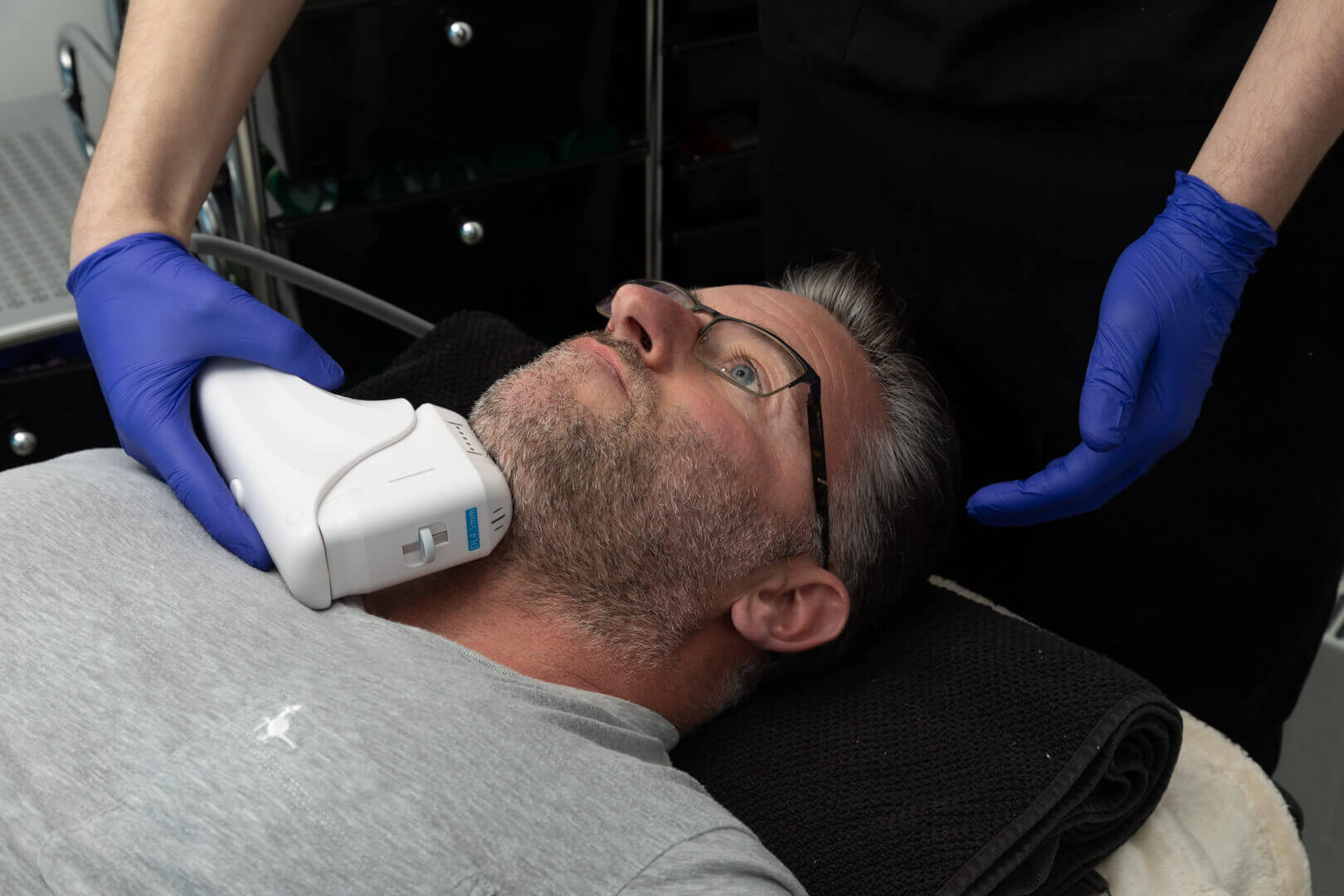
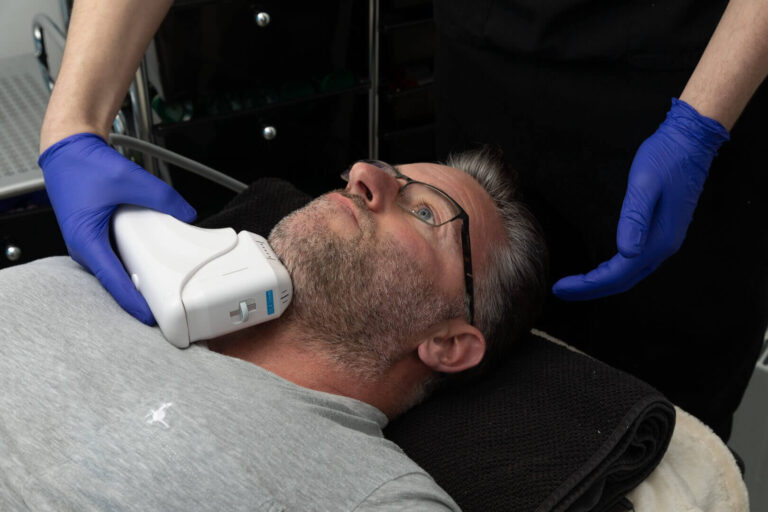
Ultherapy and HIFU are the same idea sold under two names, and the price gap between them is the reason people search for this comparison. Both use focused ultrasound to heat the deeper layers of the skin and lift the face and neck without surgery. Ultherapy is a brand, made by Merz, with a feature its rivals do not have. HIFU is the generic name for every other device that does the same thing, from excellent to dangerous. This page explains what is actually different, what the evidence says, what each costs in the UK, and why we chose the HIFU system we use at our clinic in Whickham, Newcastle, rather than Ultherapy. We do not offer Ultherapy, so if you want it you will need a Merz-licensed clinic, and we will say when we think that is the right call.
The short version
- Ultherapy is a branded ultrasound lift by Merz with built-in imaging. HIFU is the generic name for every other focused ultrasound device, good and bad.
- Both heat the same layers, both are one session, both build a lift over two to three months that lasts 12 to 18 months.
- Ultherapy costs around £2,000 to £3,500 for the face in the UK. HIFU on a reputable device is usually £800 to £1,500. Ours is £1,095.
- The practitioner and the device matter more than the brand. Cheap unbranded HIFU is the thing to avoid, not HIFU itself.
What they have in common
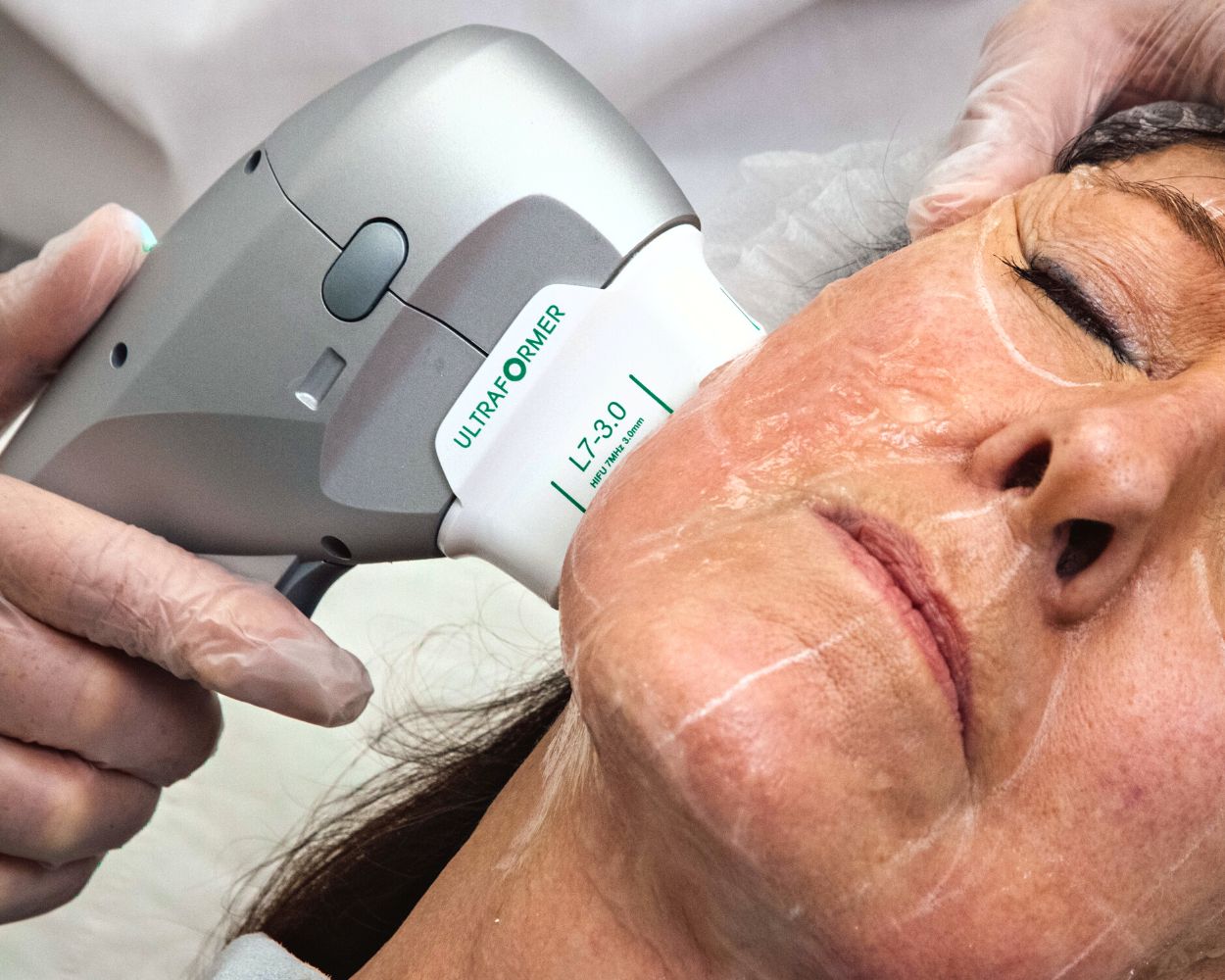
Both deliver focused ultrasound energy to set depths under the skin, typically 1.5mm, 3mm and 4.5mm. The deepest of those is the SMAS, the layer of tissue a surgeon tightens in a facelift. The energy heats small points of tissue to around 60 to 70 degrees, the tissue contracts, and over the following two to three months new collagen builds and the skin lifts. Both are a single session for most people, both feel like a hot prickle, both have a few hours of redness and both produce a result that lasts 12 to 18 months. Ultherapy was first, with FDA clearance for lifting the brow in 2009, and the technology has been copied, refined and in some cases cheapened ever since.
What is different about Ultherapy
Ultherapy has ultrasound imaging built in. The practitioner sees the layers of tissue on a screen before treating them, which means the energy is placed at the right depth for your anatomy rather than a standard depth. Merz calls this micro-focused ultrasound with visualisation. It is a real advantage in the hands of someone who uses it, and it is the main reason Ultherapy costs what it does, because the device is expensive to buy and the cartridges are expensive to replace. Ultherapy also has the most published research behind it, because it has been around longest and Merz has funded the studies.
What is different about HIFU
HIFU is a category, not a device, so the answer depends entirely on which machine a clinic has bought. At the top end are systems like the ULTRAcel Q+ we use, which deliver energy accurately at fixed depths, faster and more comfortably than older machines, with traceable cartridges and a safety record to match. At the bottom end are the unbranded machines sold online for a few thousand pounds, often marketed as 5D, 7D or 9D HIFU, which can deliver the wrong energy at the wrong depth and are behind most of the horror stories. The results from a good HIFU system are comparable to Ultherapy in published comparisons. The results from a cheap one are a lottery.
Ultherapy vs HIFU: cost in the UK
Ultherapy for the full face in the UK is typically £2,000 to £3,500, and face and neck can be more. HIFU from a reputable clinic with a named device is usually £800 to £1,500 for the face. At RT Aesthetics HIFU for the face is £1,095, face and neck £1,295, neck alone £995 and eyes and brow £895. If you are quoted £200 for a full face HIFU, that is the price of a cheap machine and an untrained operator, and it is worth walking away.
Which should you choose?
If money is not the deciding factor and you want the device with imaging and the longest research record, Ultherapy at a Merz-licensed clinic is a sound choice. If you want the same mechanism and a comparable result for roughly half the price, HIFU on a good device at a clinic that will show you the machine, name it and tell you who is trained on it is the sensible one. What matters more than the brand is the practitioner, the device and whether you were assessed honestly before you paid. A clinic that treats everyone who walks in, with either technology, is the thing to avoid.
Why we chose HIFU over Ultherapy
The ULTRAcel Q+ gives results we are happy to put our name to, at a treatment price most of our clients can reach, with cartridge traceability that protects clients from counterfeit parts. Ultherapy would mean charging around double for a result we could not show was double. If that calculation ever changes we will change with it, and in the meantime we will tell any client whose case we think suits Ultherapy better to go and have it.
Questions people ask
Is Ultherapy more effective than HIFU?
Not by any margin that published comparisons have shown, provided the HIFU device is a reputable one. The imaging in Ultherapy helps precision; it does not change what the energy does once it is delivered.
Is Ultherapy safer than HIFU?
Ultherapy is safer than cheap HIFU, because it is a regulated device used by trained operators. It is not safer than a reputable HIFU system used by trained operators. Side effects for both are redness, mild swelling, occasional numbness and, rarely, a small bruise.
Does Ultherapy hurt more than HIFU?
Ultherapy has a reputation for being the more uncomfortable of the two, which is one reason newer HIFU systems were designed with faster, cooler delivery. Both are tolerable without anaesthetic for most people.
How long do the results last?
Both last 12 to 18 months, with a maintenance session keeping them going.
Not sure which treatment you need?
Book a free 30 minute assessment at our Whickham clinic. No pressure, an honest answer and a written price.
Or call 0191 649 8699 or text 07307 201681
Read more
Our Other Blogs
Our goal is simple: safe treatment, results you can measure, and support that carries on after you leave the clinic.
Over 1,000 five star reviews