




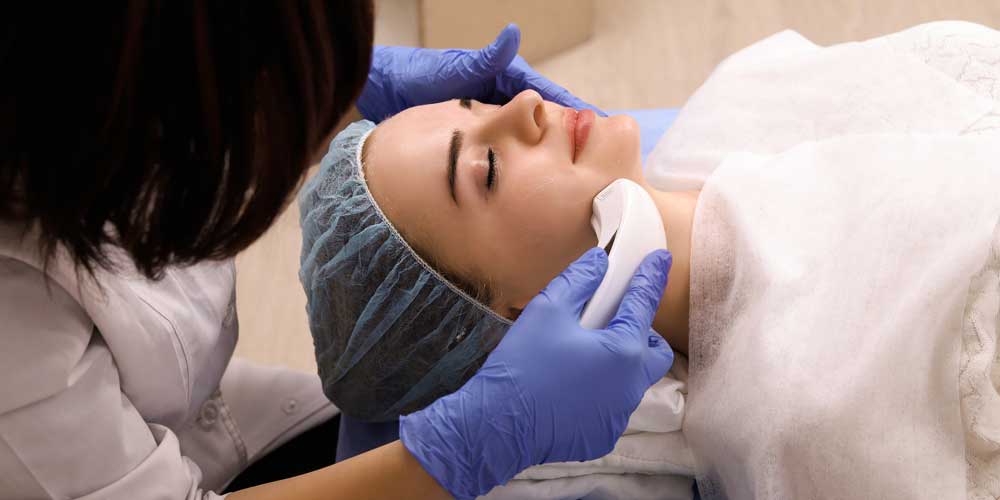
The Pros and Cons of HIFU Facial Treatments
Contents
HIFU gives a real but modest lift to the lower face and jawline with no surgery and no downtime, and it is not a facelift. The honest trade is this: you get perhaps a third of what surgery gives, for a fraction of the cost and none of the recovery, and you have to wait about three months to see it. Below is the full picture, including the parts clinics usually leave out. Our own prices and a free assessment are on the HIFU Newcastle page.
The short version
- HIFU gives a real but modest lift to the lower face and jawline, roughly a third of what surgery does, with no cuts and no downtime.
- The full result takes about three months to show and typically lasts 12 to 18 months.
- It is uncomfortable rather than painful, and results vary more between people than the marketing suggests.
- From £895 at our Newcastle clinic, with a free assessment first.
HIFU pros and cons at a glance
| In its favour | Against it |
|---|---|
| No incisions, no anaesthetic, no scarring | Results are subtle compared with surgery, and always will be |
| Back to normal the same day | The real result takes about three months to appear |
| Reaches the SMAS layer, the same tissue a surgeon tightens | Works best on mild to moderate laxity, not advanced sagging |
| Stimulates your own collagen rather than adding filler | Not permanent, most people top up every 12 to 18 months |
| One session for most people | Uncomfortable during treatment, particularly along the jaw |
| Suits all skin tones, unlike some laser devices | A list of contraindications rules some people out entirely |
The case for HIFU
It reaches the layer that actually holds the face up
HIFU delivers focused ultrasound energy to a fixed depth, bypassing the surface entirely. At 4.5mm it reaches the SMAS, the sheet of tissue a surgeon lifts during a facelift. Most non-surgical treatments work in the dermis and cannot get near it. That is what separates HIFU from a facial.
There is genuinely no downtime
Because the surface of the skin is not broken, you can go back to work, wear make-up and train the same day. Some redness and puffiness is normal for a few hours.
It builds your own collagen
The controlled thermal injury triggers a wound-healing response, so the tightening you see at three months is tissue your body has made. Nothing has been injected or added.
It works on every skin tone
Ultrasound does not target pigment, so unlike some lasers there is no raised risk of pigmentation problems in darker skin types.
The case against, honestly
It is not a facelift and will not pretend to be
If your skin has significant sag, HIFU will not fix it, and any clinic telling you otherwise is taking your money. The treatment suits mild to moderate laxity, which usually means people from their mid thirties to mid fifties. Beyond that the honest answer is often surgery, and we will tell you so.
You wait three months for the result
There is a small immediate tightening on the day, then it settles and nothing appears to be happening for weeks. Collagen takes that long to lay down. People who want to look different for an event in a fortnight will be disappointed.
It is uncomfortable
Not unbearable, but not relaxing either. The deeper passes along the jaw and under the chin produce a brief sharp heat with each line of energy. Most people describe it as very manageable; nobody describes it as pleasant.
It does not last forever
Ageing carries on underneath the result. Most people book a maintenance session every 12 to 18 months. Budget for that rather than treating it as a one-off.
Results vary more than the marketing suggests
Skin quality, age, smoking, sun damage and how much laxity you started with all change the outcome. Two people the same age can get noticeably different results from the same treatment.
Side effects and who cannot have it
Expect mild redness and swelling on the day, tenderness to the touch for one to two weeks, and occasionally a tingling sensation. Temporary numbness and small bruises happen but are uncommon.
HIFU is not suitable if you have metal implants in the treatment area, an active skin infection or open wound where we would be treating, severe or cystic acne on the area, or a pacemaker or other electronic implant. We also ask you to wait if you are pregnant or breastfeeding, and we take a full history of any fillers or threads in the area, because energy and previous work do not always mix well.
How it compares with the alternatives
| Treatment | What it does better | Where it falls short |
|---|---|---|
| HIFU | Reaches the deepest layer of the four, single session, no downtime | Slow to show, uncomfortable, modest lift |
| Radiofrequency (BTL Exilis Ultra) | Comfortable, gradual, good for skin quality and texture | Works shallower, needs a course of sessions |
| Dermal filler | Immediate, restores lost volume | Adds volume rather than lifting, needs repeating, can look heavy if overdone |
| Surgical facelift | By far the biggest and longest-lasting change | General anaesthetic, weeks of recovery, scars, cost |
These are not really competitors. A lot of people get the best result from HIFU for the lift and radiofrequency for skin quality, which is a conversation worth having at an assessment rather than picking one from a web page. See Exilis vs HIFU for the longer comparison.
So is HIFU worth it?
If you have mild to moderate laxity, you want a visible improvement rather than a transformation, and you can wait three months for it, then yes. If you are hoping for a surgical result without surgery, no treatment on the market will give you that, and we would rather say so at the assessment than take payment and disappoint you at the twelve week photographs.
Read more about HIFU ULTRAcel Q+ at our Newcastle clinic, or book a free assessment and we will tell you honestly whether it is the right treatment for your face.
Weighing it up locally? Our page on HIFU in Newcastle covers what the treatment involves at our Whickham clinic, who it suits and what it costs. You can also book a free, no-obligation assessment and get an honest answer before you commit to anything.
Not sure which treatment you need?
Book a free 30 minute assessment at our Whickham clinic. No pressure, an honest answer and a written price.
Or call 0191 649 8699 or text 07307 201681
Our Other Blogs
Our goal is simple: safe treatment, results you can measure, and support that carries on after you leave the clinic.
Over 1,000 five star reviews